Each customary eastern blade serves as a beautiful masterpiece of skill, but assume you need to convey your personal character? Refining your armament is a insightful journey, allowing you to forge a truly rare piece. From the tsuka wrapping and band to the covering design and blade pattern, each detail offers a chance for unique expression. This analysis delves into the area of katana adjustments, providing knowledge for both rookies and skilled enthusiasts aiming to inscribe their mark on the time-honored art of the samurai.
Primary Authentic Artistry
For starters motivated to embark on the exciting journey of eastern weapon training , 1060 steel katanas present an ideal entry point. This defined grade of essential steel reaches a perfect balance between expense and capability . While not reaching hard as supreme steels, 1060 allows for a manageable level of whetting, making it appropriate for learners to develop the rudiments of sharpening care and respect the attractiveness of authentic Japanese weaponry. It’s a wonderful choice for developing experience without the budgetary burden of more sophisticated steels.
T-10 Steel Blades : Achieving Effectiveness and Cost
Assisting hobbyists seeking an authentic sword experience without exceeding the budget , T10 steel katanas represent a promising option. These implements offer a considerable improvement in lastingness compared to basic alternatives, exhibiting respectable edge retention and enough flexibility for fundamental slicing techniques. While not rivaling the superior characteristics of fine steels like T100 or folded element , T10 provides a commendable blend of utility and price , making them a common choice for apprentices and those on a narrow revenue .
Surpassing the Edge : Enhancing Your Edge's Components and Grip
As the finished sword is undeniably the central point of a katana, truly heightening its appeal lies in the cautious customization of its fittings and grasp . This procedure allows individuals to manifest their individual style . Review the wide possibilities: menuki - decorative appliqués that bring visual interest ; the hamon casings – often finely fashioned ; the tsuka body itself, wrapped in conventional ito lace ; and the fusa finial , which can be fashioned from various fabrications like bullion or horn .
- Elect themes that correspond with you.
- Experiment with multiple materials .
- Stress merit for a permanent consequence.
The Fascination of the Katana: Origins, Mastery, and Material
Each nihonto contains a matchless allure, steeped in epochs of Asian history and ancestry. More than merely a implement of fighting , it's a figure of the warrior ethos – a fusion of expertise and command . Its unfolding spanned many generations, with early cutting instruments evolving into the sleek-lined curvature and dangerous edge we accept today. The craftsmanship involved is truly astounding , requiring long periods of instruction to achieve . The process involves a complex folding of steel bloom , creating layers that boost the edge’s flexibility and hacking ability. Different schools of forging emerged , each with their unique secrets and approaches for achieving the supreme proportion and crispness - a truly heavy pursuit.
- Early Katana forms
- The function of the nihonto in bushi culture
- Old-fashioned crafting approaches
Choosing the Perfect Steel for Your Sword Project Project: 1060 vs. T10
Picking the proper steel is fundamentally important for any armament project, and the option between 1060 and T10 can be difficult. 1060 is a favored American alloy, offering a reasonable balance of strength and resilience, allowing it relatively easy to condition. However, T10, a Asian steel, habitually boasts heightened wear sustainability and can likely achieve a increased peak hardness, although it can be somewhat difficult to apply and requires detailed heat annealing. Consider your proficiency and projected outcomes: for a trainee, 1060 may be a more straightforward launchpad, while the T10 steel katana proficient smith might appreciate the expanded traits of T10.
- Effortlessness of Processing
- Wear
- Terminal Tenacity
Achieving Mastery: Complex Katana Adjustment Techniques
Refining the technique of katana adjustment extends far beyond basic sharpening. Serious connoisseurs are now examining advanced techniques to truly unlock a blade's hidden potential. This features intricate work with the temper line, utilizing specialized compositions for differential strengthening and carefully choosing the outline of the guard to optimize balance and operation. Beyond purely functional refinements, artisans are increasingly focused on creating unparalleled aesthetic elegance, through complex carving and layered glazes that truly transform a katana into a showpiece.
From Elemental Metal to Artistry: Forging a 1060 Blade
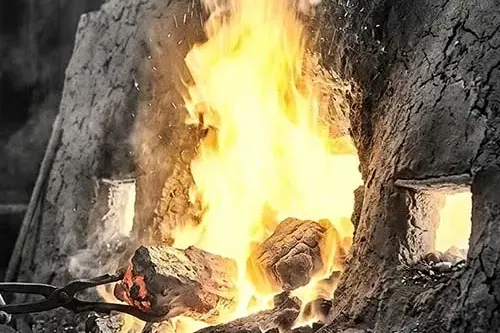
The journey launches with standard 1060 fabrication , a durable material far absent the polished katana it will shift into . Experienced bladesmiths carry out a complex process of integrating and constructing the unrefined steel, repeatedly tempering it and pounding it to clear impurities and fashion a steady grain structure. This arduous process, often enduring for stretches , builds the fundamental resilience and suppleness characteristic of a standard Japanese blade . Extra heat refinements, including accurate hardening and conditioning , are mandatory to achieve the desired steadiness of sharpness, persistence and magnificence.- Layering: Minimizes impurities and constructs grain structure.
- Constructing: Forms the steel into the initial blade form.
- Quenching: Establishes the final hardness and flexibility.
The Persistent Magnetism of the Katana: Thorough Examination of Alloy and Modification
This venerable katana holds present a compelling symbol of Japanese heritage , its fascination far exceeding mere armaments . Forged from exclusive steel and periodically featuring intricate details , the system of creation itself is a celebrated art. Beyond the fundamental craftsmanship, the ability to personalize a katana - from the temper line to the hilt wrapping and collar - grants for a deeply individual embodiment for both admirers and wielders alike. This integration of long-established steelwork and boundless personalization produces the katana's continued fame across the planet .
